
Skyello - 2025-2026
Building Autonomous Compliance for the Most Change-Resistant Users in Industry
Scroll
Skyello - 2025-2026
01 A Note on How This Was Built
I started this project the traditional way -wireframes, user journey maps, stakeholder review cycles, design handoffs. Then I stopped.
Midway through Skyello, I realized the conventional design process was the bottleneck, not the solution. Weeks spent producing static artifacts that were outdated by the time they were reviewed. Wireframes that communicated layout but not behavior. Journey maps that looked thorough but never survived first contact with real users.
I rebuilt my entire workflow around AI. Instead of spending two weeks on wireframe iterations, I generate dozens of high-fidelity variations in hours -stress-tested against real scenarios, real constraints, and real user behavior before a single pixel ships. Instead of documenting assumptions in a deck, I validate them live. The design process went from linear and slow to parallel and fast -without sacrificing rigor.
This isn't about replacing design thinking. It's about eliminating the busywork that masquerades as design thinking. The research still happens. The strategic decisions still happen. What doesn't happen anymore is burning weeks on deliverables that exist to communicate progress rather than create it.
If your team is still running wireframe → review → revision → handoff cycles measured in weeks, there's a faster way -and this case study is proof of what it looks like in production.
Recruiter TL;DR -30 seconds12 min read
02 The Problem
Oil and gas companies don't have a compliance system. They have a pile of disconnected tools held together by habit.
Clipboards. Cameras. GE Vernova. SAP. Robots. Drones. Each one captures a fragment of the picture. None of them talk to each other. Compliance posture gets assembled manually by people cross-referencing spreadsheets, walking facilities with checklists, and relying on institutional memory that walks out the door every time someone retires.
Every compliance finding carries legal weight. A missed violation isn't a UX problem -it's a seven-figure liability. A false positive wastes inspection resources and erodes trust in the system. The margin for error is zero.
And the people buying compliance tools? Refinery operations leaders. The most conservative, risk-averse buyers in any industry. Their default answer to new technology is no.
A missed violation isn't a UX problem. It's a seven-figure liability.
The Current Compliance Landscape
03 The Constraints
These shaped every design decision. They came first, not last.
Inspectors wearing PPE on catwalks in loud environments. Whatever I designed had to work without training or onboarding.
Every finding is a legal document. A wrong flag means acting on bad data. A miss means liability exposure.
Inspectors, operations leaders, and regulators -each needing different information at different depths from one system.
50-person and 500-person refineries have different risk profiles. The product architecture had to support that.
No competitor to reference. No established patterns. Everything designed from first principles.
04 The Approach
I didn't start with wireframes. I started with the adoption problem.
You can't drop autonomous drones on a plant manager's desk on day one. The product had to earn trust incrementally -and each step had to deliver standalone value, not just be a waypoint to the "real" product.
So I designed a three-tier architecture where each tier is both a product and an on-ramp to the next one.
You can't sell autonomy to someone who doesn't trust you yet. You have to earn it in layers.
Three-Tier Product Architecture
Tier 1
Insight Layer
Operations Leaders
Unified compliance visibility. Aggregates fragmented data into a single view. No behavior change required.
Standalone value: See what you couldn't see before
Tier 2
Field IO
Inspectors
Passive data capture during existing workflows. Tribal knowledge captured without changing how anyone works.
Standalone value: Capture more with less effort
Tier 3
Autonomous Orchestration
System (AI Agents)
AI dispatches inspections, flags risks, and enforces compliance autonomously -after months of earned trust.
Standalone value: Proactive compliance, not reactive
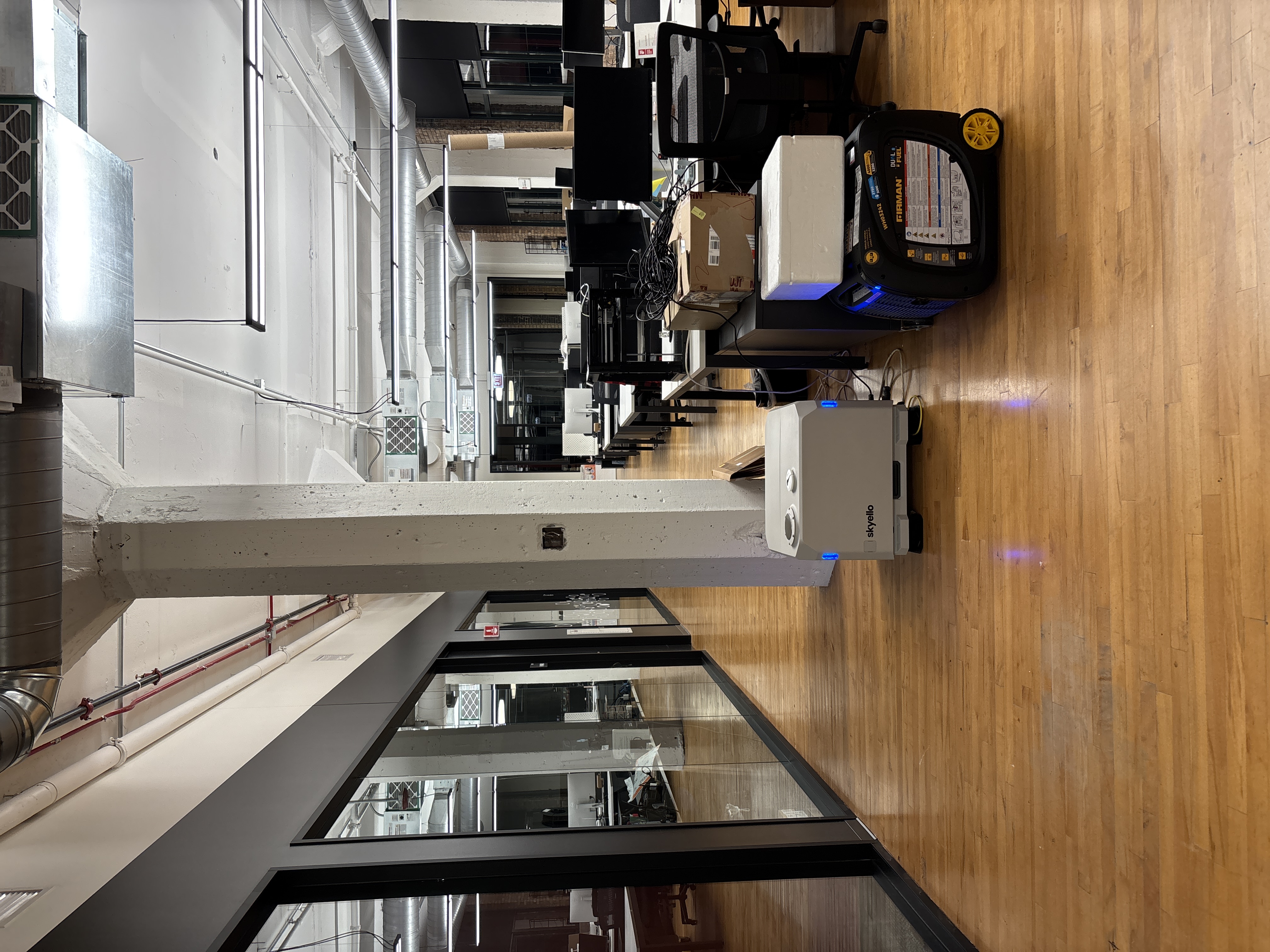 Skyello Lab - Hardware & Robotics Testing
Gives operations leaders visibility into their compliance posture that they've never had before. Aggregates data from existing fragmented tools into a single view.
Before Skyello, there was no unified picture. Getting visibility doesn't require changing workflows, buying hardware, or trusting AI. It's a window, not a replacement.
Once leaders see their compliance landscape clearly, they see gaps. The data is only as good as what inspectors capture manually. That creates pull: "What if we could capture more, with less effort?"
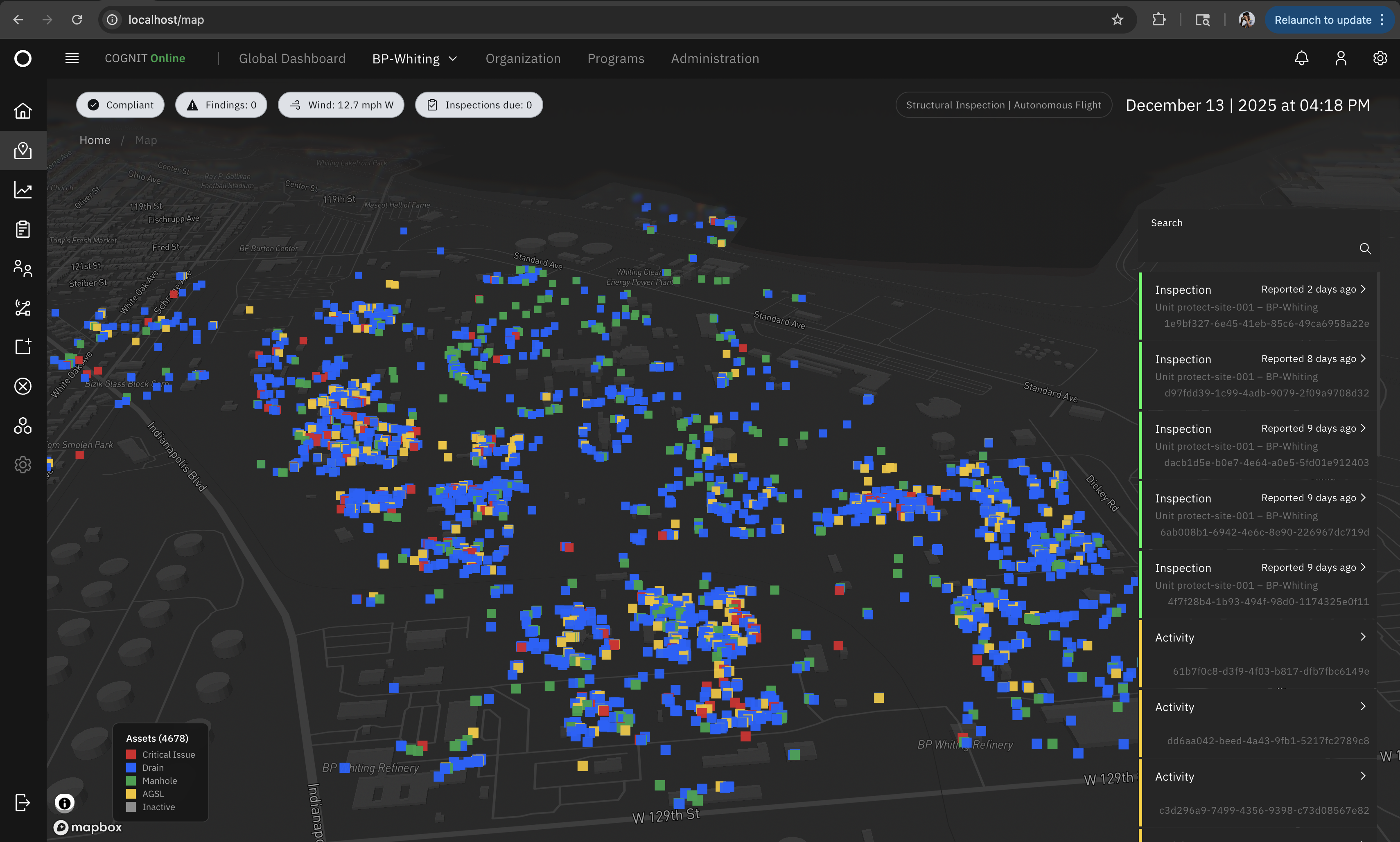
Puts a tool in inspectors' hands that captures tribal knowledge passively -without asking them to change how they work.
Capture data as a byproduct of work people are already doing. The system observes, records, and structures information that would otherwise live in someone's head or on a forgotten clipboard.
The hardest design problem in industrial tech is getting field workers to adopt new tools. Field IO was designed to fit into existing inspection workflows, not replace them.
After months of capturing field data, the system starts knowing things. Operations leaders see it being right -consistently, verifiably right. That earned trust is the prerequisite for the final tier.
The system dispatches agents on its own -identifying compliance risks, scheduling inspections, flagging violations before humans spot them.
The customer has watched the system be right for months. Trust isn't assumed -it's been built through evidence over time.
How do you design an interface for autonomous action while maintaining human confidence? Radical transparency. Every action shows its reasoning, data sources, confidence level, and citation chain. The human never wonders "why did it do that?"
Trust Timeline -How Adoption Actually Happens
Month 1
Customer sees their data unified for the first time
Month 3
Inspectors using Field IO without friction
Month 6
System recommendations match human judgment consistently
Month 9+
Customer enables autonomous dispatch
08 The Design Decisions That Mattered
My first instinct was wrong. I designed for completeness -more data points, more context, more visibility. But in a refinery, information overload is a safety problem.
The redesign: surface the finding, the citation, the action. Everything else gets out of the way. Not minimalism -a safety decision.
Citation Pattern -Progressive Disclosure
Valve 7B -Pressure Relief Assembly Out of Spec
Set point drift detected. Current: 142 PSI. Required: 150 PSI +/- 2%. Last calibration: 2024-11-03. Action required before next operational cycle.
Inspection Record & Sensor Data
Field IO capture #4821 by J. Martinez, 2025-01-15. Corroborated by pressure sensor log #PV-7B-2025-0115. Historical trend: 3 drift events in 14 months.
API 520 / OSHA 1910.119(j)(4)
Pressure relief devices must be tested and maintained per API 520 guidelines. OSHA PSM requires documentation of all inspection findings. Non-compliance triggers mandatory corrective action within 30 days.
Inspectors need what to do next. Operations leaders need risk posture. Regulators need audit trails. One information architecture, three entry points.
Information Architecture -Three Views, One System
Inspector View
Action-focused
Operations View
Risk-focused
Regulator View
Evidence-focused
Shared Data Layer -Single Source of Truth
09 What Didn't Work
They don't. Every additional element on screen is cognitive load they can't afford in a high-consequence environment. The redesign stripped away everything that didn't answer "what do I need to do right now?"
Iteration Graveyard -Designs That Were Killed
Dense Dashboard v1
Too dense for field conditions. Required 20+ seconds to parse.
Multi-Panel Overview
Required interpretation -failed the 5-second test with inspectors.
Comprehensive Risk Matrix
Looked thorough but buried the action under layers of context.
Tabbed Interface
Hid critical information behind tabs. In PPE, every tap costs time and focus.
The problem space was too novel for wireframe-review-revise cycles. Once we started using AI to iterate -generating variations, stress-testing against real scenarios -iteration collapsed from weeks to hours.
Process Comparison
Traditional Process
4–6 weeks
AI-Accelerated Process
Hours to days
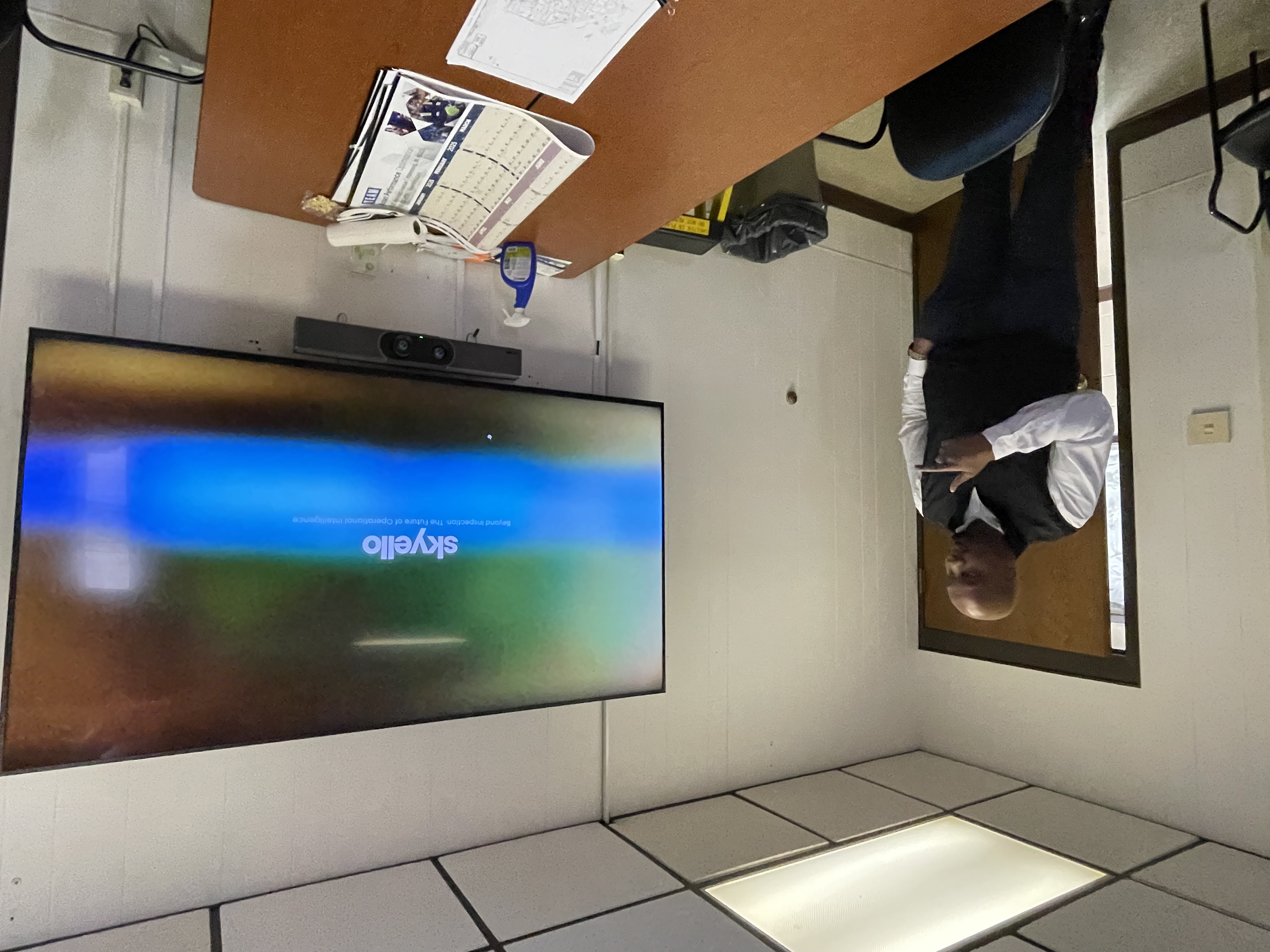 Client Presentation -Skyello in the Field
10 The Adoption Ramp as a Design Strategy
The three-tier architecture isn't just a product structure. It's a go-to-market strategy embedded in the design itself.
Most enterprise products sell the vision and ask for a leap of faith. In oil & gas, that leap doesn't happen. So I designed the product to make it unnecessary. Each tier delivers value on its own terms and naturally creates the conditions where the next tier makes sense.
The design constraints were the strategy. Nothing happens on day one that requires trust that hasn't been earned.
Full Product Ecosystem
Insight Layer
Visibility & aggregation
Field IO
Passive data capture
Autonomous Orchestration
AI-driven enforcement
User Flow
Operations leaders monitor → Inspectors capture → System acts
Data Flow
Existing tools → Unified view → Field enrichment → Pattern detection
Trust Flow
Observe accuracy → Verify predictions → Grant autonomy
11 Project Outcome
I led zero-to-one product design for Skyello, taking the AI-enabled industrial compliance platform from an undefined opportunity to a working product and paid enterprise deployment while expanding the team around customer-driven iteration.
The AI-native product-development workflow I developed here changed how I approach the designer's role. It compresses work that does not require human judgment so more time can go toward product decisions, functional prototyping, and real customer needs.
12 What I Learned
The hardest design problems aren't visual. They're organizational and cultural.
Designing the interface was the straightforward part. Designing the adoption path through a market that actively resists change -where getting it wrong has seven-figure legal consequences -that's the actual work.
I learned that the best product architecture is invisible. When it works, customers feel like every step was obvious in hindsight. They don't see the ramp you built underneath them.
I learned that AI doesn't replace the designer's judgment -it eliminates the lag between having judgment and acting on it. The thinking still matters. The waiting doesn't.
If you're hiring for a team where design decisions have to survive regulatory scrutiny, multi-stakeholder approval, and real-world deployment in high-consequence environments: that's the work I've been doing.
13 Artifacts Index
For serious evaluators who want to go deeper:
Skills demonstrated in this project
0-to-1 Product Design Product Architecture Information Architecture AI/ML Interface Design Agentic AI UX Progressive Disclosure Enterprise SaaS Regulated Industries Design Systems User Research Multi-Audience Design AI-Accelerated Workflow Trust Architecture Adoption Strategy Figma Prototyping